Tracing Gold
Academic Group Project: Graduate Studio
Date: 04.20.24
Instructor: Menna Agha
Softwares: Illustrator, Photoshop
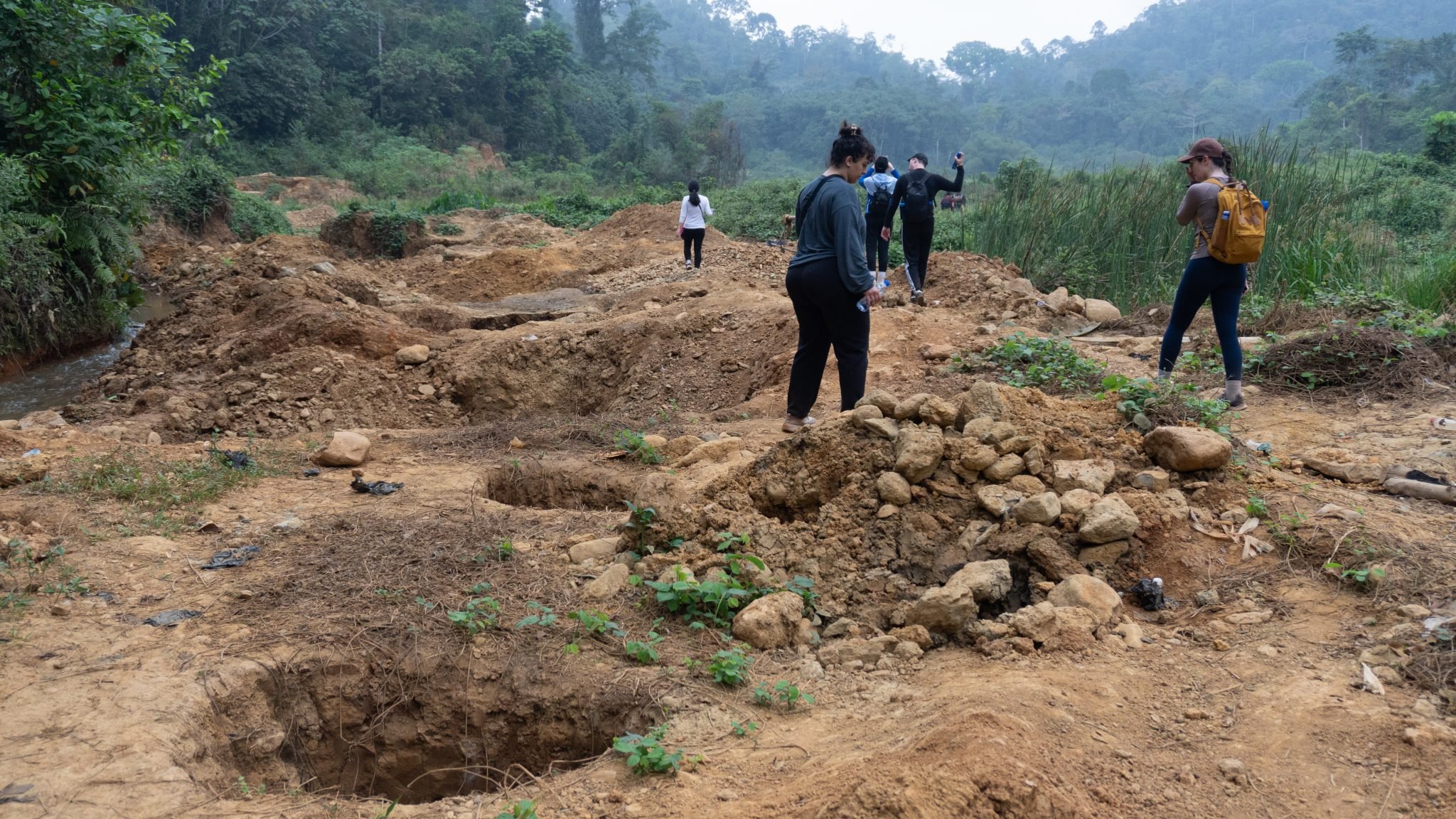
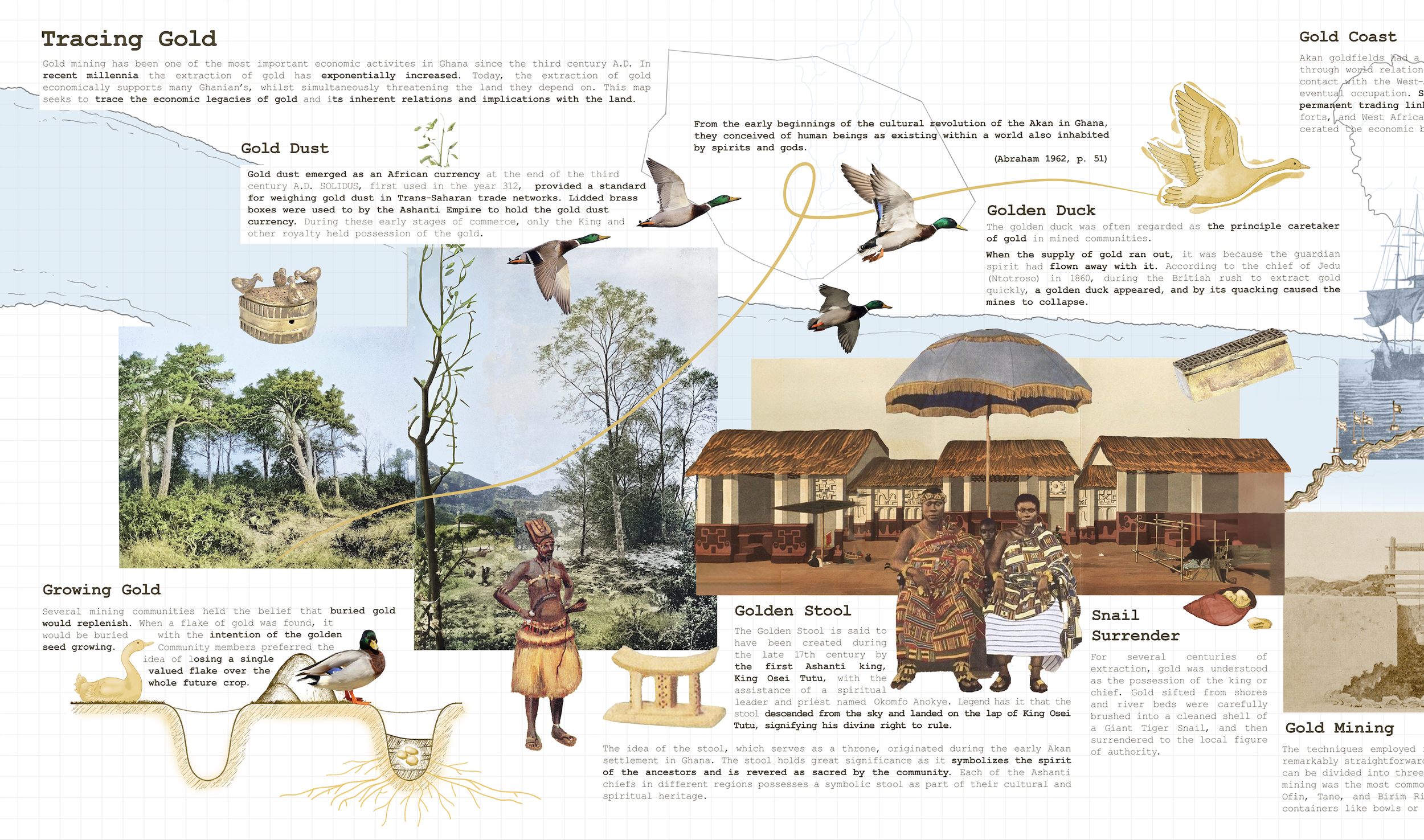
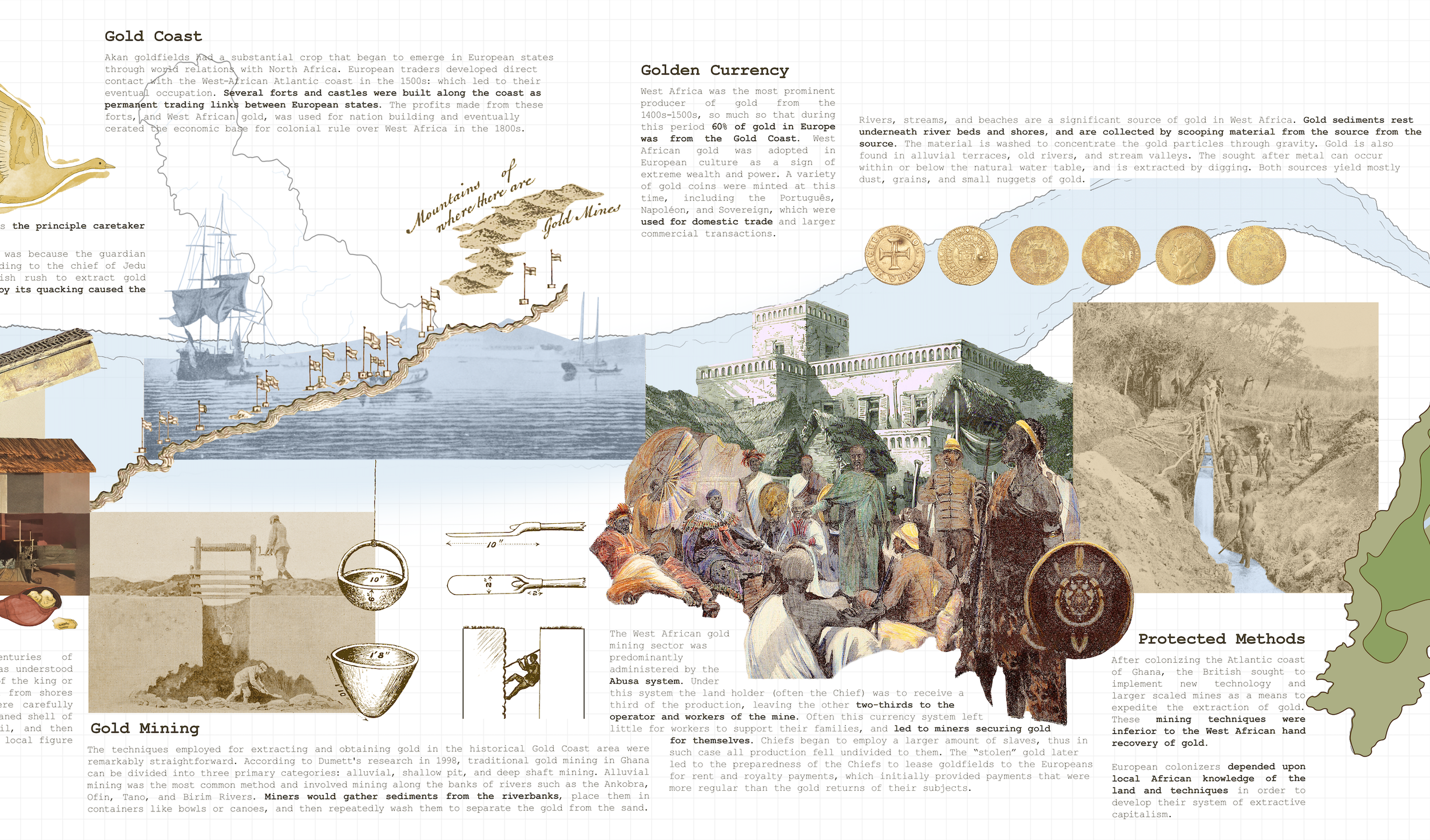
The map titled "Tracing Gold," created collaboratively, explores the historical and economic significance of gold mining in West Africa, particularly in Ghana, historically known as the Gold Coast. Gold mining has shaped Ghana's economy since as early as the third century A.D., evolving from a royal prerogative into a widespread economic activity crucial to local livelihoods. The map outlines cultural practices and beliefs tied to gold, such as the revered Golden Stool symbolizing Ashanti sovereignty, and myths like the Golden Duck, believed to protect and signal the depletion of gold resources. It further illustrates traditional mining methods like alluvial mining along rivers including the Ankobra, Ofin, Tano, and Birim. The project highlights how these indigenous techniques were later exploited and transformed by European colonizers, whose pursuit of gold through advanced yet less sustainable methods disrupted local economies and communities. This historical analysis emphasizes the intertwined relationships between economic pursuits, cultural beliefs, environmental impact, and colonial exploitation.